DORY : Games that double as a memory checkup
| Stack | Next.js 15, Ionic + Capacitor, PostgreSQL, Prisma |
| Focus | Cognitive care, personalized memory games, caretaker reporting |
| Collaborator | Natthanicha Vongjarit |
What it does
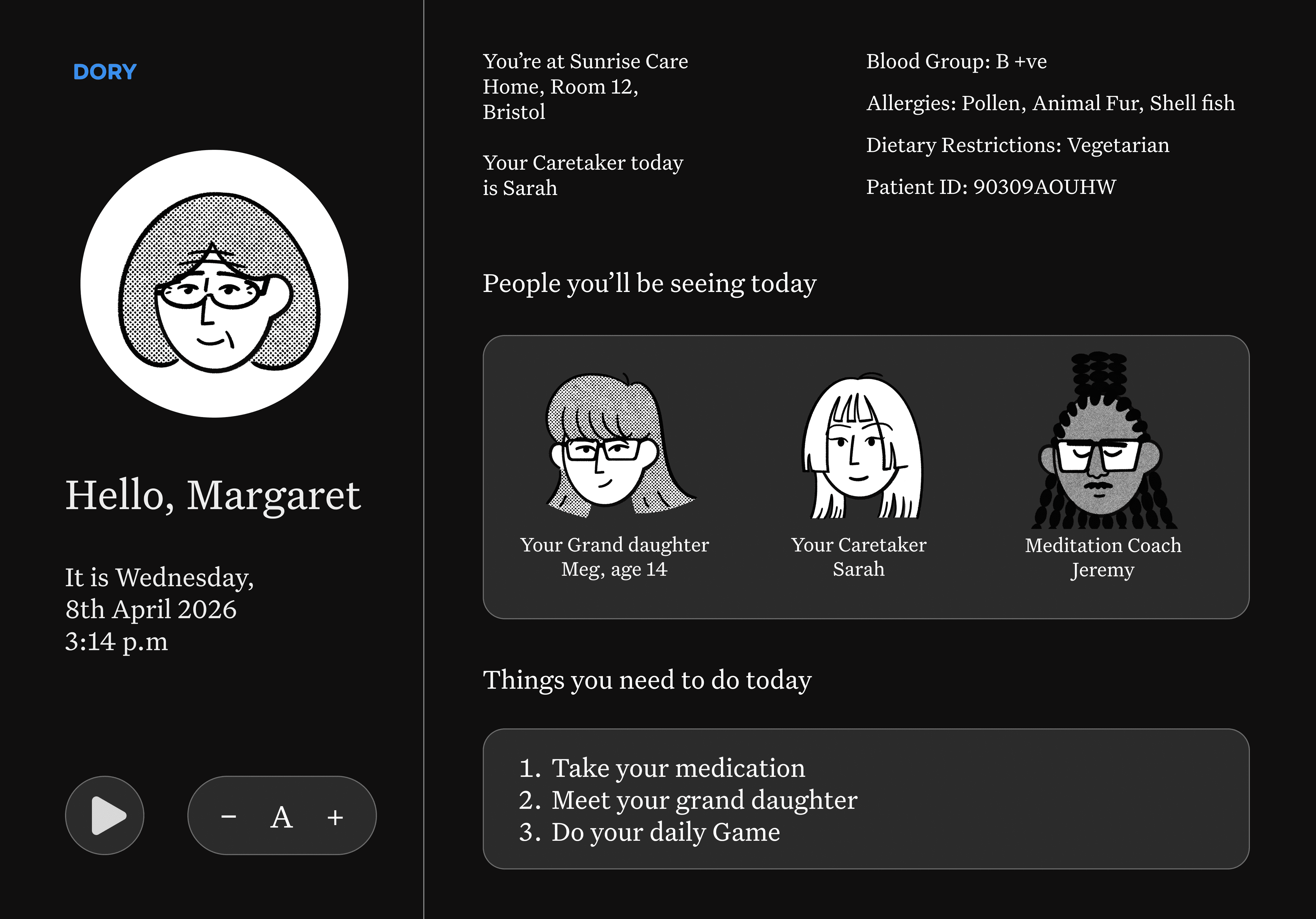
DORY is a companion app for people living with dementia or Alzheimer's. Every day it runs a short set of memory games tuned to that person's own life and culture, then turns their answers into a report a caretaker can actually read: which brain region the day's games leaned on, how accuracy trended over the week, and where to focus next.
The problem with generic exercises
Most cognitive exercises for dementia patients are generic: the same word puzzle, the same trivia deck, regardless of who's playing. A card game that means nothing to someone who never played it, or a song prompt in a language they don't speak, tests confusion more than memory.
And even where good exercises exist, the person running them, usually a family member or an overstretched caretaker, rarely gets more than a subjective "she seemed okay today" to go on.
Recall works better on your own memories
DORY's games are built around one idea: recall works best when the material already means something to the player. A French patient gets Belote, not solitaire. Someone who grew up on 60s pop gets a lyric game drawn from that decade rather than a modern playlist they've never heard.
The bet is that a game built from a patient's own history measures how well they remember. A generic one mostly measures how unfamiliar the exercise is.
The games
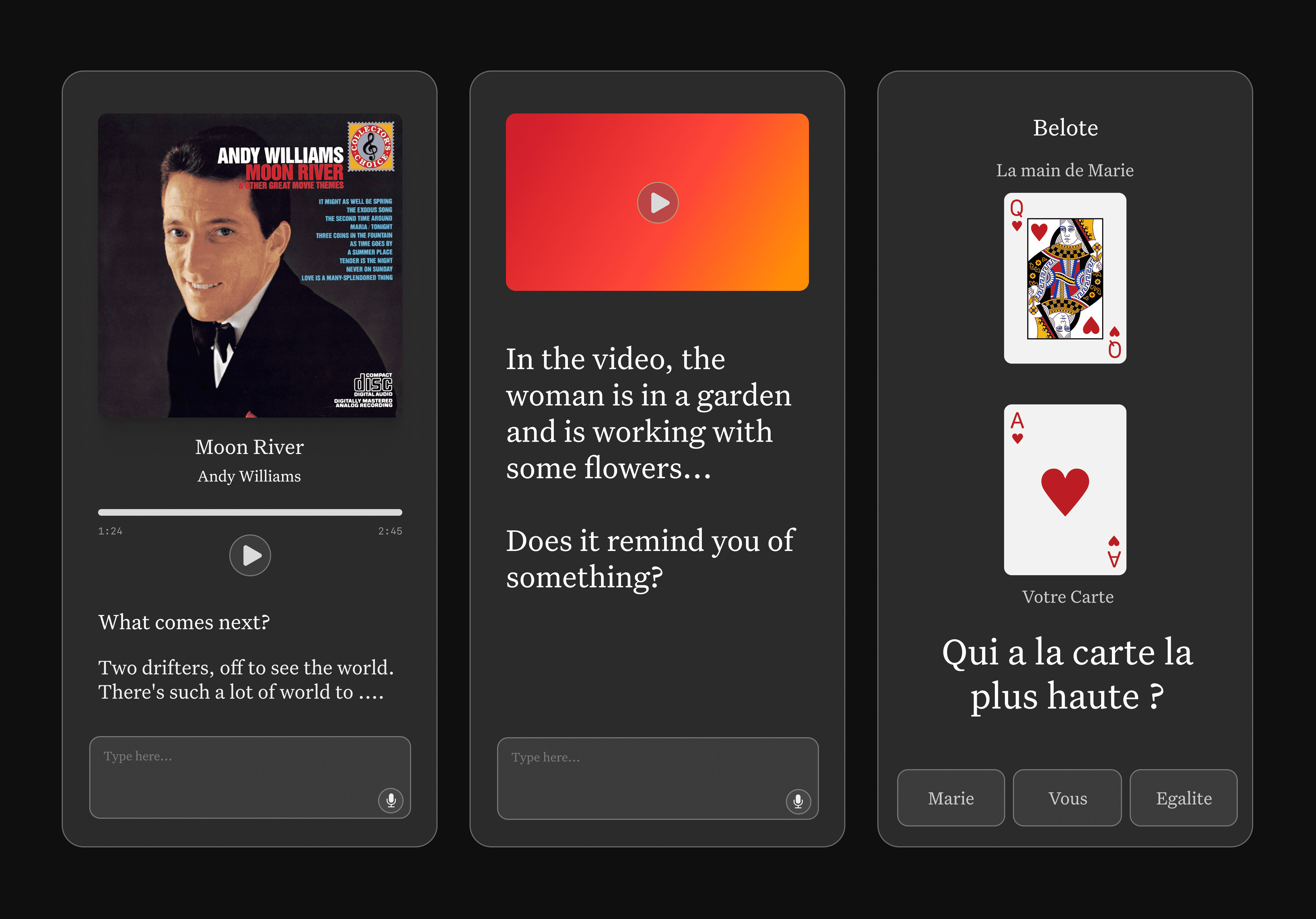
Lyric completion plays a song the patient would recognize and asks them to finish the next line, testing long-term musical and verbal memory.
A reminiscence prompt shows an old photo or video clip and asks what it reminds them of, encouraging autobiographical recall instead of a right-or-wrong answer.
Belote, a French trick-taking card game, tests working memory and quick decision-making by asking the patient to judge which of two cards is higher, played entirely in their own language.
Turning play into a report
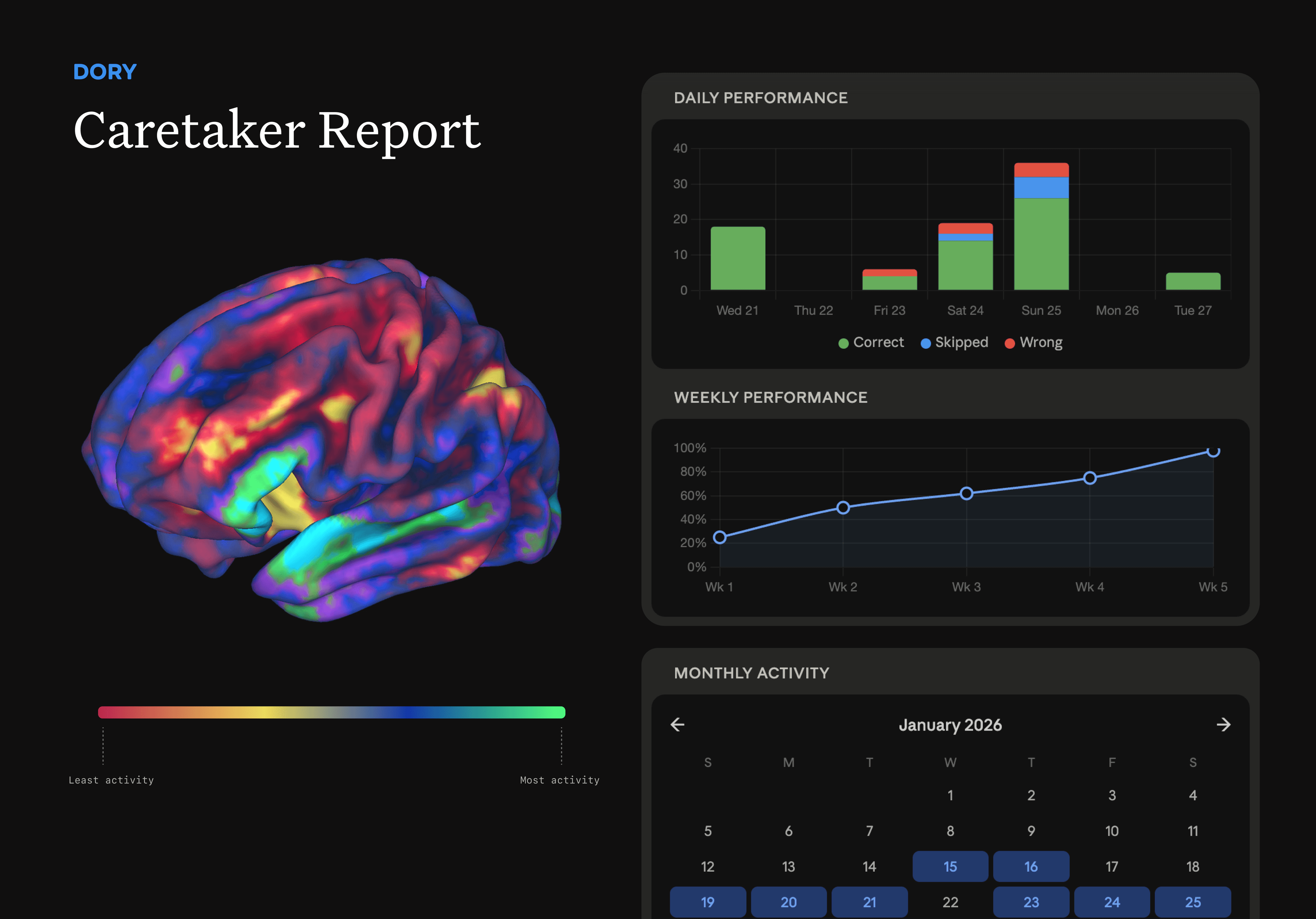
Every answered question feeds a caretaker report. A brain-surface heat map shows which regions the day's games leaned on, shaded from least to most active. Daily bars break each session into correct, skipped, and wrong answers, a five-week trend line tracks overall accuracy, and a calendar marks which days the patient played.
None of this replaces a doctor. It replaces "how's mom doing today" with an answer you can point to.
Where it runs
DORY has taken shape across a few codebases: a Next.js and PostgreSQL web app for the caretaker dashboard and reporting, and a native iPad build (Ionic React and Capacitor, with a Prisma-backed data layer) for the patient-facing games themselves, since a shared iPad on a nightstand is a far more realistic place for this to live than a browser tab.
What's hard about this
Cultural adaptation is the hard part. Sourcing music, photos, and card games that match one person's background doesn't scale the way a generic trivia deck does, and right now that content gets picked by hand for each patient.
Automating it, starting from a patient's own listening history or family photos, is the next problem worth solving here.